

Tesla (TSLA) has started sending large waves of its Full Self-Driving (Supervised) Lite AI software update to HW3 cars with the latest point release version 2026.20.6.11 (read the complete release notes below).
Owners of the legacy Hardware 3 (HW3)-equipped Tesla cars started getting the FSD v14 Lite (2026.20.6.11) update on Tuesday, July 21 (detailed rollout status and official release notes below).
The company’s head of AI, Ashok Elluswamy, had announced that version 2026.20.6.10 of the FSD v14 Lite would go into wide release. But Tesla decided to make a quick bug-fix update and started pushing the new 2026.20.6.11 point release to a larger number of Tesla HW3 cars.
Interestingly, Tesla has merged the firmware version for both FSD v14 Lite and FSD v14.3.6, which is 2026.20.6.11. This shows that HW3 Tesla cars with the 2026.20.6.11 update have the latest distilled features as HW4 cars on FSD v14.3.6.
However, HW3 cars will never be as capable as HW4 ones, because of compute limitations for the large FSD AI model. The FSD v14.3.6 update is purely for Hardware 4 (HW4/AI4) vehicles, while the FSD v14 Lite is for HW3 Teslas.
FSD v14 Lite (2026.20.6.11) Rollout Status
The FSD v14 Lite (2026.20.6.11) update was first spotted on July 21. However, on the first day of its release, it was distributed to a very limited number of Tesla HW3 cars.
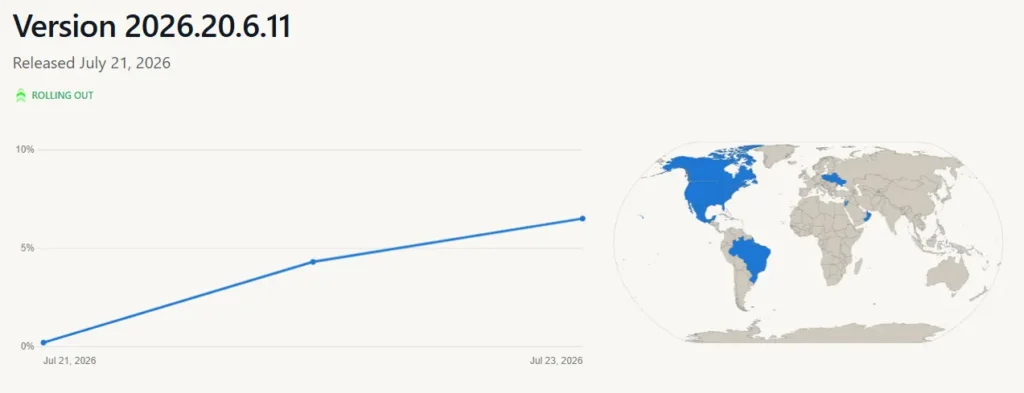
On July 22, Tesla started pushing it to more users. Today (July 23), an even larger wave has started going out. The graph below shows the constant upward increase of the FSD v14 Lite (2026.20.6.11) over-the-air (OTA) software update distribution.
Closely looking at tracking data at TeslaFi.com and Tessie, Tesla is currently only rolling out the FSD v14 Lite (2026.20.6.11) update to its HW3 customer cars in the United States and Canada.
As of this writing, around ~10% of the Tesla HW3 fleet in the US and Canada have received FSD v14 Lite (2026.20.6.11).
It looks like Tesla HW3 car owners in Europe will have to wait for the FSD v14 Lite update a bit more, even though HW4 owners in 5 European countries are enjoying Full Self-Driving on their cars.
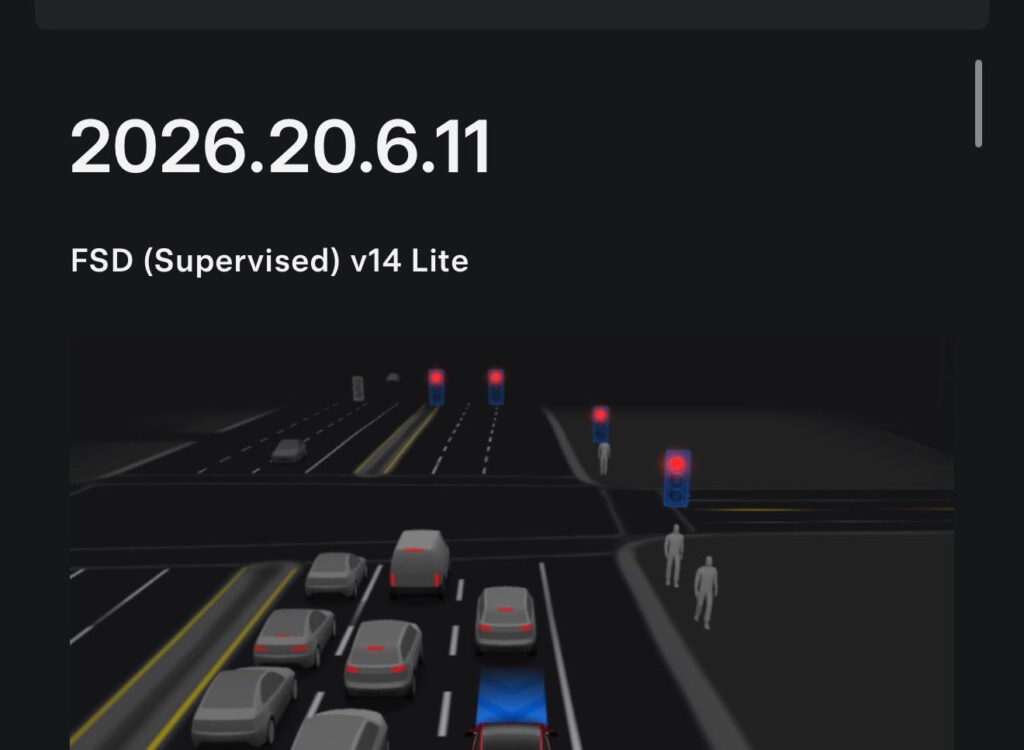
Official Release Notes: FSD (Supervised) v14 Lite (2026.20.6.11 for HW3 Tesla cars)
FSD (Supervised) v14 Lite (2026.20.6.11) includes:
- Distilled the intelligence from HW4 V14 into HW3. This allows HW3 to directly learn how to handle scenarios using HW4 V14 as a guide. This process unlocks the improvements that have been made to HW4 including Reinforcement Learning (RL) and offline models for HW3.
- Improved both proactive and reactive responsiveness across a wide variety of categories including navigation handling, merges and forks, pedestrian interactions, traffic lights, and vehicle cut-in scenarios.
- Improved general comfort in nominal scenarios through fewer false slowdowns, smoother steering and more consistent lane centering.
- Introduced parking, unparking, and reversing capabilities.
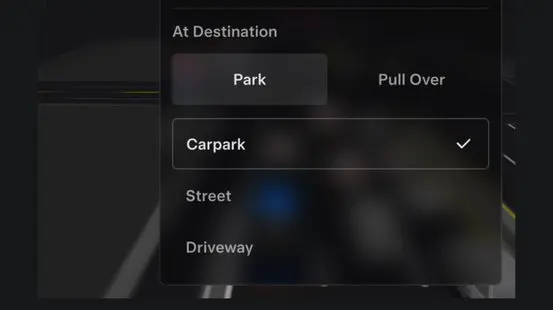
- Added Arrival options for you to select where FSD should park: in a Parking Lot, on the Street, in a Driveway, or at the Curbside.
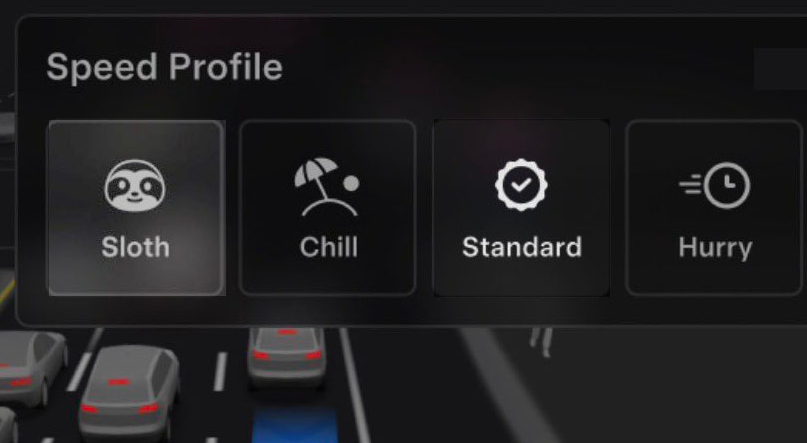
- Speed Profiles are now available at all times, to further customize driving style preferences.
Start Self-Driving from Park
A button will appear on the screen when driver requirements are met. Driver requirements include (but are not limited to):
- Driver is seated in driver’s seat
- Driver is buckled
- Cabin Camera is unobstructed
Brake Confirm requires the driver to press and release the brake pedal before FSD (Supervised) can be activated. When Brake Confirm is disabled, pressing the button will allow Self-Driving to apply the brakes and engage FSD (Supervised). If driver detection requirements are not met or if FSD (Supervised) does not detect a driver, you will be required to press and release the brake pedal to confirm. You can enable Brake Confirm in Self-Driving > Brake Confirm.
This feature does not make your vehicle autonomous and you must remain attentive and be ready to take over at any time. Only a licensed driver authorized to operate the vehicle should be allowed access to the driver’s seat position any time the vehicle is not in Theater or Arcade mode.
UI Improvements
Adjust settings like the Speed Profile and Arrival Options directly from the Self-Driving visualization on the center display.
Speed Profiles
FSD (Supervised) will now determine the appropriate speed, based on a mix of driver profile, speed limit, and surrounding traffic.
- Introduced new Speed Profile SLOTH, which comes with lower speeds & more conservative lane selection than CHILL.
- Driver Profile now has a stronger impact on behavior. The more assertive the profile, the higher the max speed.
- Right scroll-wheel up/down now adjusts Speed Profile waiting rather than your precise max speed offset selection in mph/kph.
Arrival Options
- You can now select an arrival option such as Parking Lot, Street, Driveway, and Pull Over for Robotaxi-style drop-offs.
- Your preferences for arrival options and preferred parking positions are persisted for each destination.
Security Improvements
This update includes important security fixes and improvements.
Note: The release notes have not changed since the last version.
Stay tuned for constant Tesla updates. Follow us on:
Google News | Flipboard | X (Twitter) | WhatsApp Channel | RSS (Feedly).
Related Tesla FSD News
- Tesla FSD v14 Lite finally goes wide release with software update version 2026.20.6.11 (complete release notes)
- Tesla hints at FSD v14 Lite (2026.20.6.10) going wide release (official release notes, early review)
- Tesla adds Camera Previews in FSD v14.3.5 (2026.20.6.6), official release notes, rollout status
- FSD v14 Lite remains limited release even when it shows good performance on Tesla HW3 cars
- Tesla tests Cybercab robotaxis on Austin roads without a steering wheel or any pedals
- Tesla Early Access users share FSD v14 Lite first impressions (videos)


 pushes FSD v14 Lite as a wide release with firmware version 2026.20.6.11. Get the rollout status, official release notes, and more.)